
PRX Derm Perfexion: An Honest Look at the Treatment Everyone Is Talking About
You've been down this road before. A new treatment comes along, the before-and-afters look incredible, the clinic makes it sound like the answer to everything, and you book it — only to end up with results that were fine, maybe, but nothing close to what you were expecting. Or worse, you spend a week looking like you lost a battle with your own face and come out the other side wondering if it was worth it.
So when someone tells you there's a treatment that delivers real collagen stimulation, visible skin improvement, zero peeling, and zero downtime, your first instinct is to roll your eyes.
That's a reasonable reaction. And it's exactly why this article isn't going to try to sell you on PRX Derm Perfexion. Instead, it's going to tell you what it actually is, what it actually does, where it falls short, and what the real questions are before you decide if it's worth your time and money.
Let's Start With Why You're Skeptical
The aesthetics industry has a credibility problem, and if you've been paying attention, you already know it. "Revolutionary." "Game-changing." "No downtime." These words get thrown around so freely that they've essentially lost all meaning. Every new device, every new formula, every new protocol gets the same breathless introduction, and then reality shows up.
There are two complaints that come up more than anything else.
- The first is the downtime lie. "No downtime" has been used to describe treatments that leave your skin red and raw for three days, procedures that require you to avoid the sun for two weeks, and protocols that technically don't require you to stay home but definitely make you want to. At some point, the phrase stopped meaning anything at all.
- The second is the results gap. The distance between what a treatment looks like in a clinical photo taken under perfect lighting three months after the procedure, and what you actually see in your bathroom mirror two weeks after your appointment. Most clinics show you the best-case scenario. Most patients experience something more modest.
Here's the thing, though. Not every treatment is overhyped. Some things actually work. And PRX Derm Perfexion has enough legitimate science behind it and enough genuinely satisfied patients that dismissing it outright would be doing yourself a disservice. The key is understanding exactly what it does and doesn't do before you walk in the door.
What PRX Derm Perfexion Actually Is
We’ll start off by saying that PRX is not a chemical peel. That distinction matters, and we'll get into exactly why in a moment, but it's worth saying upfront because the word "acid" is in the ingredient list and a lot of people make assumptions from there.
PRX Derm Perfexion is a biorevitalization skin treatment developed by the renowned Italian skincare company WiQo. It combines three active ingredients — trichloroacetic acid (TCA) at 33%, hydrogen peroxide, and kojic acid — each with a specific job, and the way they interact with each other is what makes PRX genuinely different from anything that came before it.
TCA at 33%
Now, we get it, 33% is a significant concentration, the kind you'd find in a medium-to-deep chemical peel. In a traditional peel, that concentration causes visible surface damage, leading to days of peeling and redness while the skin repairs itself.
That surface disruption is the mechanism that drives results in a conventional peel. PRX changes that equation entirely.
Hydrogen Peroxide
This is the ingredient that makes PRX what it is. Added in a precise balance, hydrogen peroxide neutralizes TCA at the skin's surface. The acid never gets the chance to cause that visible damage that you’d see in a regular peel.
Instead, it bypasses the outer layer of the skin (the epidermis) and penetrates directly into the dermis — the deeper layer of skin where fibroblasts live and where collagen and elastin production are happening. The stimulation happens deep down. The surface stays intact. No peeling. No recovery needed.
Kojic Acid
Kojic acid handles the brightening side of the formula. It suppresses melanin production, which means it works on dark spots, uneven skin tone, and the kind of sun damage that accumulates over the years. It also calms inflammation and supports healthy cell turnover, leaving the complexion clearer and more luminous session after session.
The "surface stays intact, deep stimulation happens below" claim sounds like exactly the kind of thing a marketing department would write. But it's actually just chemistry. The interaction between hydrogen peroxide and TCA is a documented mechanism, not a brand story, and that's the part that earns PRX its credibility.
What The PRX Derm Perfexion Treatment Can Actually Do for Your Skin
This is where most treatment articles lose the plot by showing you only the highlight reel. Here's the full picture.
What It Does Well
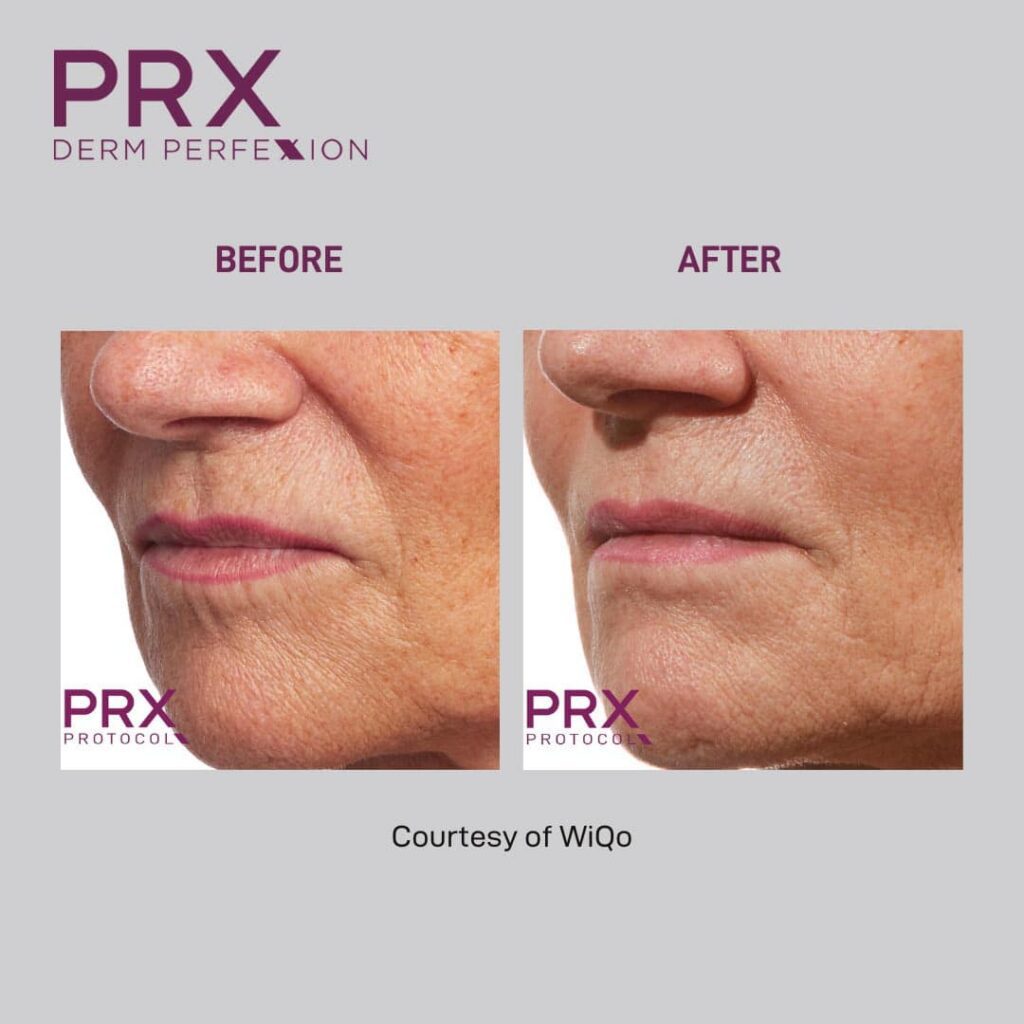
Over a series of four weekly treatments, patients consistently see real, measurable improvements. Skin firmness increases. Fine lines soften. Skin texture becomes smoother and more refined. Tone evens out, particularly in areas with sun damage and mild hyperpigmentation. Overall radiance improves noticeably, often from the very first session.
Acne scars — especially shallower ones — respond well over the course of a full series. Crepey texture on the neck, chest, and hands improves meaningfully. And because PRX doesn't cause photosensitivity, it can be used year-round, including in summer when most peels and lasers are off the table.
What It Won't Fix
PRX will not significantly address deep wrinkles or folds. It will not replace lost volume — that's what fillers are for. It will not produce the dramatic skin tightening that RF Microneedling or a surgical procedure can deliver. Severe melasma and deep scarring typically need a more comprehensive approach.
If those are your primary skin concerns, PRX might still be part of your treatment plan, but it shouldn't be the whole treatment plan.
The Timeline Nobody Mentions
Results from PRX build gradually, and they keep building after your series ends. Collagen production doesn't stop when you walk out the door. It continues for weeks after your last treatment, so your skin at six weeks post-series looks better than it did right after your final session.
That progressive quality is one of the benefits of PRX Derm Perfexion. But it also means you need patience. If you're expecting to look transformed come morning, you'll be disappointed.
Who Gets the Most Out of PRX And Who Might Not
PRX tends to deliver its most impressive results for patients in their 30s through 50s, dealing with early-to-moderate signs of aging like fine lines, mild laxity, uneven tone, and general dullness, who want meaningful improvement without the commitment of more aggressive treatments. It's also genuinely excellent for patients dealing with pigmentation concerns or acne scarring across a wide age range.
One of its most significant advantages is its safety across all skin types and tones. For patients with medium to darker skin who have been told they're not good candidates for laser treatments or stronger peels, PRX opens up a resurfacing option that carries far less risk of post-inflammatory hyperpigmentation. That's not a small thing — for a lot of patients, it changes what's possible.
There are also some situations where PRX isn't appropriate at all, and it's worth knowing them upfront. PRX should be avoided if you have any of the following:
- Active skin irritation or inflammation, including sunburn, a flare-up of eczema, or any open wounds on the treatment area
- Active acne breakouts in the area being treated
- Seborrheic dermatitis — an inflammatory skin condition that affects the face and scalp
- A known allergy to any part of the formulation — TCA, hydrogen peroxide, or kojic acid
- Extremely sensitive skin that makes topical acid treatments inadvisable
If any of these apply to you, that doesn't mean PRX is permanently off the table. It may simply mean the timing isn't right or that your skin needs to be in a calmer state before treatment begins.
The Comparison You Actually Want to See
If you're seriously considering getting a PRX Derm Perfexion treatment done, you're probably also weighing it against other options. Here's a straight look at how it stacks up without the spin.
PRX vs. Chemical Peels
Traditional peels and PRX both use TCA, and both stimulate collagen, but they work at opposite ends of the skin's structure. Peels disrupt the surface, force the skin to repair itself, and deliver results through that repair process — along with the redness, peeling, and sun sensitivity that come with it.
PRX skips the surface damage entirely and goes straight to the dermis.
For patients who want more aggressive surface resurfacing, a peel may still be the right call. For most people who want real improvement with zero disruption to their lives, PRX wins.
PRX vs. Laser Resurfacing
Lasers like HALO or BBL® Hero™ are exceptional tools with outcomes PRX can't replicate, especially if you have vascular concerns, deeper pigmentation, or more significant resurfacing needs. They also cost more per session, require more recovery time, and aren't appropriate for all skin tones or all times of year.
PRX fills in where lasers can't go — darker skin tones, summer months, patients who simply cannot afford the downtime — and maintains results between laser treatments for those who use both.
PRX vs. RF Microneedling
RF Microneedling goes deeper and delivers more dramatic tightening and collagen remodeling than PRX. It's also more uncomfortable, more expensive per session, and comes with a few days of visible recovery.
These two treatments are not competitors. They're complements. Many VITRA patients use PRX to maintain and build on the results from their RF Microneedling sessions in between appointments, keeping the skin actively improving rather than sitting still.
What the Treatment Actually Feels Like
You arrive, your provider does a brief skin assessment, and your skin is cleansed thoroughly. The PRX formula is then massaged directly onto the skin. Massaged as in there’s no needles, no injectables, no devices.
Most patients feel a mild warmth or light tingling. Some feel almost nothing. Your provider applies the appropriate number of layers for your specific concerns. The formula sits on your skin for the right amount of time, then it's rinsed off with water. A nourishing post-treatment cream goes on. You're done. The whole thing takes 15 to 20 minutes.
Right after, your skin will look more hydrated, glowing and a little more awake. There may be some mild redness, which typically fades within a few hours. You can go straight back to work, your workout, dinner — whatever's on the schedule. There's nothing to explain, nothing to hide, nothing to wait out.
In the days that follow, some patients notice very mild flaking, not the dramatic peeling of a chemical peel, just a light shedding that's easily managed with a good moisturizer. Most patients don't experience even that. The collagen production happening beneath the surface is invisible, but it's real, and it's active.
How To Take Care of Your Skin After a PRX Session
Getting the most out of PRX isn't complicated, but the first 24 to 48 hours after each session matter more than most people realize. Your skin is in an active renewal phase, and what you do during that window either supports that process or gets in the way of it.
The basics are simple. Use a gentle cleanser, a good fragrance-free moisturizer, and broad-spectrum SPF 30 or higher. That's your routine for the first day. Avoid actives, exfoliants, and experimenting with anything new.
A few other things worth knowing:
- Moisturize more than you think you need to. Whether or not you experience any flaking, consistent hydration supports the skin barrier and keeps everything calm between sessions.
- Sunscreen every day, without exception. PRX doesn't cause photosensitivity, but UV exposure breaks down collagen — the very thing you're working to build. Every session you invest in is partially undone by unprotected sun exposure.
- Put the actives away for a few days. Retinol, exfoliating acids, strong vitamin C — all great for your skin in general, but unnecessary and potentially irritating for the first few days after treatment. Your provider will tell you exactly when it's safe to reintroduce them.
- Skip the heat. Saunas, steam rooms, hot yoga, and very hot showers are best avoided for the first 24 to 48 hours. Heat amplifies redness and inflammation in freshly treated skin.
- Show up consistently. This is the one that makes the biggest difference. The patients who see transformative results are the ones who complete their full series and maintain it. Each session builds on the last — skip too many, and you break the momentum of collagen stimulation that makes PRX work.
PRX Derm Perfexion is not magic. It's not going to reverse decades of sun damage in four sessions or replace the results of a surgical procedure. If you walk in with unrealistic expectations, you will walk out disappointed, and that will be a shame, because PRX is genuinely good at what it does.
What it does is this: it stimulates real collagen production in the dermis, improves skin tone and texture meaningfully over a series, delivers immediate radiance and hydration, and works on essentially every skin type and tone — without asking you to peel, hide, or put your life on hold. For a lot of people, that combination is exactly what they've been looking for and couldn't find anywhere else.
The skepticism that brought you to this article is healthy. Keep it. Bring it to your consultation. Ask the hard questions and expect straight answers. If PRX is right for you, our board-certified providers will tell you exactly why; if it's not, they'll tell you that too.
At VITRA Aesthetics, that's the only kind of conversation we know how to have. Schedule your consultation and see how PRX Derm Perfexion can bring out your radiant, youthful skin.

The Science Behind How Neurotoxins Work: Botox, Dysport & More
If you've caught yourself staring in the mirror wondering where those fine lines between your eyebrows came from — because they sure weren’t there yesterday — don’t worry, most of us have been there. And if you've been seriously considering neurotoxin treatments or just curious, it's completely okay to have questions about what's actually going on before you commit to anything.
Because the thing is, understanding the science behind what’s going on in your face isn’t just for aesthetic professionals. It’s for you too. And once it's explained in a way that actually makes sense, it's kind of fascinating.
When you know what these treatments are doing, you go from feeling a little unsure to feeling like you've got this. You walk into your consultation ready to have a real conversation, asking the right questions, understanding the answers, and feeling good about whatever you decide. So let’s get into it.

The Science Behind Neurotoxin Magic
Botulinum toxin, or Botox, is a purified neuromodulator that has become one of the most popular and studied cosmetic treatments in the world. And, we know, the word "toxin" tends to raise eyebrows, and that's understandable. But rest assured, it has a decades-long safety record and FDA approval for both cosmetic and medical uses.
Nerves, Muscles, and the Signal That Gets Blocked
When your brain sends a signal, your nerves release a chemical messenger called acetylcholine that tells your muscles to contract. These nerve signals happen thousands of times a day, without you even noticing.
Botulinum toxin injections temporarily block that signal at the injection site, preventing the targeted facial muscle from contracting fully. Don’t worry, the nerve itself remains healthy and intact, but the communication is put on pause. This creates a gentle relaxation in the muscle, which is what allows the visible changes to happen above.
Why Wrinkles Soften (and Where They Come From in the First Place)
Many of the lines we notice on our faces, like forehead lines, crow's feet, and those “11’s” between your eyebrows, develop from years of repeated muscle movement and facial expressions. Every time you squint, frown, or raise your eyebrows, those muscles contract and the skin folds along the same patterns. These are called dynamic wrinkles because they form through motion.
Over time, these folds deepen into visible lines, even when your face is at rest. When neurotoxins reduce that repeated muscle movement in the treated area, the skin above has the opportunity to smooth out and recover. The lines soften because the constant creasing has been interrupted, giving your skin a chance to rest and renew.
It's Temporary — And That's Actually a Good Thing
Neurotoxin treatments are made to be temporary. Over three to four months, your body gradually restores the nerve-muscle connection, and movement returns naturally. This is what makes the treatment safe and fully reversible.
It also gives you flexibility: you can adjust your treatment plan over time, refine your results, or pause if your goals change.
Regular maintenance appointments help sustain results. And because the treatment is temporary, you're always in control of how you want to move forward.
Which Neurotoxin Is Right For You?
The most common neurotoxin brand names share the same active ingredient, botulinum toxin type A, but they have subtle differences in formulation, onset time, and how they spread once injected:
- Botox is the most well-known and has the longest track record, making it a reliable choice for most treatment areas.
- Dysport tends to spread slightly more, which can be beneficial for larger areas like the forehead, and it often shows results a bit faster.
- Xeomin is often called the "naked" neurotoxin because it contains no accessory proteins, which some practitioners prefer for patients who may have developed resistance to other brands.
- Jeuveau is a newer option with a formulation similar to Botox, designed specifically for aesthetic use.
- Daxxify is the newest neurotoxin on the market and is formulated to last longer than other options, with results often extending up to six months or more for some patients.
When you meet with your provider, they’ll help you understand which option is the best one for your goals and treatment area.
What To Expect Before, During, and After
Knowing what to expect makes everything easier and a lot less "wait, what happens now?" So let's walk through it together, from your very first consultation all the way through the weeks after treatment.
The Consultation
It all starts with a real conversation. Your provider is going to take a good look at your facial anatomy and actually listen to what you're hoping to get out of treatment.
This is where the most important decisions are made: which neurotoxin to use, how many units you’ll need, and exactly where to place each injection for the most natural looking results. Your provider might also give you a heads up to skip the Advil and other NSAIDS beforehand to keep bruising to a minimum.
At VITRA, this part of the process is a real back-and-forth. It's about finding the approach that works for your face, your concerns, and the way you want to look and feel.
The Treatment Itself
The actual cosmetic procedure is quicker than you think — 10 to 15 minutes from start to finish. Your provider will use a very fine needle to make a series of small injections into the targeted muscles. Most people describe the sensation as a quick pinch or pressure rather than pain.
How many injections depends on what areas you're treating. Some side effects you may experience are minor redness or small bumps at the injection sites right after the procedure, but those usually fade within an hour or two.
One of the best parts is that downtime is minimal. Many patients schedule treatments during a lunch break and return to their day without anyone noticing.
The Days After
Your results won't appear immediately, and that's normal. Over the first few days, you may start noticing that certain movements feel softer and less pronounced. Full results typically become visible within 7 to 14 days as the neurotoxin settles. Following a few simple aftercare steps during that window can really help you get the most out of your treatment.
Results generally last three to four months. After that, the nerve–muscle connection gradually comes back on its own. If you decide to not continue with maintenance appointments, your face will simply return to how it looked before treatment. There's no rebound effect and your lines don’t look worse.
For those who do keep up with it, regular appointments every few months are really all it takes to hold onto that smooth, refreshed look you've worked for.
Separating Fact From Common Neurotoxin Myths
Neurotoxins have been around for decades, and yet somehow, the beauty myths just keep making the rounds. Some of it is outdated information, some of it is fear of the unknown, and some of it is that one story that got more dramatic every time it was retold.
Here's what's actually true and what you can stop worrying about.
"It'll Make Me Look Frozen"
The "frozen face" look that people worry about? It’s caused by improper technique or over-treatment, not because of the neurotoxin injection itself.
In the hands of an experienced injector, you’ll have natural-looking results. You can still raise your eyebrows, still laugh, still make every face you've always made.
The whole point isn't to create muscle weakness or leave you feeling stiff and expressionless. Instead, Botox cosmetic treatments work with your nervous system to soften specific movements while allowing the rest of your face to move freely and naturally.
"It's Addictive"
Let’s clear this up: neurotoxins are not addictive. There’s nothing in a Botox treatment or any other neurotoxin that creates physical dependency or alters your body's chemistry in a way that would cause withdrawal or cravings.
This is a well-studied cosmetic procedure with well-documented side effects, none of which include addiction. If patients choose to return regularly for maintenance appointments, it's because they genuinely love their results and want to sustain the smooth look they've achieved.
The decision to continue is always yours, based entirely on how you feel about the outcome and whether it fits with your goals.
"Starting Young Will Make My Wrinkles Worse Over Time"
There's a lot of buzz around preventative neurotoxins lately, and the worry that starting early will somehow damage your skin or speed up aging just isn't backed by science.
Here are the facts: Neurotoxins work by temporarily reducing muscle contractions and muscle activity in certain areas, which is what softens your frown lines, glabellar lines, and forehead wrinkles. When you start before those lines have a chance to really set in, you're actually getting ahead of the problem by giving your skin fewer opportunities to fold in the same spot over and over again.
Botulinum toxin has no long-term negative effects on your skin's structure or aging process. Starting early is a proactive approach that works with your skin's natural biology — not against it.
"If I Stop, My Skin Will Sag"
This is one of the most common fears, and honestly, it makes total sense to wonder about it. But here's the reassuring truth: if you decide to stop, your muscles just gradually go back to moving the way they always did. Your face returns to where it was before you started. Not worse, not different. Just back to baseline.
Neurotoxins aren’t the same as dermal fillers, which add volume beneath the skin. They don't alter your skin's structure or create dependency. There's no rebound effect and no worsening of your original concerns.
Instead, your skin resumes its natural aging process as if the treatments had never happened. Your skincare routine and lifestyle habits will continue to influence how your skin ages, just as they always have.
"Only Women Get Neurotoxins"
The idea that neurotoxins are only for women is outdated. More men than ever are seeking neurotoxin treatments, both for cosmetic purposes and for medical concerns. Aesthetic confidence isn't gender-specific, and taking care of your appearance with professional treatments is a choice that transcends outdated stereotypes.
Beyond facial rejuvenation, neurotoxins have been approved to treat a range of medical conditions, including:
- Excessive sweating (hyperhidrosis)
- Chronic migraines
- Overactive bladder
- Blepharospasm (eyelid spasms)
- Cervical dystonia (neck muscle spasms)
During your consultation, your provider will review your medical history and goals to create a treatment plan that works for you, regardless of gender.
Ready To See What Neurotoxins Can Do for You?
You've got the knowledge, you've got the facts. Now it's just about taking that first step. A consultation at VITRA is a no-pressure conversation with an experienced aesthetic provider who's genuinely invested in helping you look and feel like the best version of yourself.
Book your consultation with VITRA today and take the first step toward feeling more confident in your skin.

Men’s Botox Explained: How Modern Aesthetics Are Changing the Way Men Age
The conversation around men and aesthetics has changed — and honestly, it's about time. Men today are investing in themselves across the board. You're paying attention to what you eat, how you train, how you dress, and how you present yourself professionally. Skincare and aesthetics are just the next logical step in that same mindset.
Botox injections have come a long way from the outdated idea of frozen faces. Today's approach softens the signs of stress and time while keeping you looking like yourself. The goal is straightforward: more rested, and still authentically you.
We’re here to answer the practical questions that matter most. What does Botox actually do for male facial anatomy? How does the treatment process work? What results can you realistically expect, and how long do they last? We'll walk you through everything you need to know to make decisions that feel right for you.
Why Men Are Getting Botox and Why It’s Completely Normal
For many men, Botox isn't about vanity. It's not about chasing some trend or trying to have the youthful look of twenty-five again. It's about looking as strong, approachable, and well-rested as they actually feel on the inside.
Deep frown lines can make you look stern or tired, even when you feel energized and engaged. Forehead wrinkles and crow's feet can add years that don't reflect your actual vitality. Botox addresses these concerns while preserving the strong, defined features that give your face its character.
More and more men are viewing Botox — or, as some call it, “Brotox” — as a practical tool for professional presence and personal confidence, much like they treat a good haircut or a tailored suit. Taking steps to look as capable and approachable as you feel has become a normal part of modern self-care, and Botox is a straightforward way to achieve that alignment.
How Botox Technically Works And Why It’s So Precise
If you're going to do any kind of cosmetic procedure, you want to understand what it is. And knowing how this works is going to make it very clear why choosing the right injector is everything.
The Science in Simple Terms
Every time you squint, frown, or furrow your brow, those muscles contract, and over time, the skin above them starts to crease and hold that position, causing dynamic wrinkles. That’s where botulinum toxin type A comes in.
Sold under brand names like Botox, Dysport, Xeomin, and Jeuveau, these FDA-approved neuromodulator injectables work by blocking the nerve signals that tell targeted muscles to contract. The muscle relaxes, the skin smooths out, and the result is a noticeably more refreshed, youthful appearance.
Precision Placement = Natural Results
An experienced injector with extensive training in facial anatomy understands exactly where to place each injection and how many units of Botox to apply to each treatment area.
This technical expertise allows your injector to map your unique facial muscles and customize the injection sites accordingly. Small adjustments in placement or dosage can make the difference between a refreshed appearance and an overdone look. That's why choosing an experienced provider matters for achieving natural-looking results.
Male Muscle Density and Dosing Differences
Men's facial anatomy differs from women's in ways that directly impact how Botox works. Male patients typically have denser facial muscle mass and thicker skin. These physical differences mean men typically require a higher amount of Botox units to achieve the same smoothing effect in treatment areas. An injector experienced with male patients understands these distinctions and adjusts the treatment plan accordingly.
While those differences are important, the goal remains the same: soften signs of aging and reduce the appearance of wrinkles, while maintaining masculine features and natural facial expressions.
Common Treatment Areas for Men
Your injector will assess your facial anatomy and recommend treatment areas based on your aesthetic goals and the signs of aging you want to address. Here's a breakdown of the most common areas and what's actually happening in each one:
- The Glabella (those "11" lines between your brows): This is the number one area for men, and for good reason. These vertical frown lines make you look angry, intense, or unapproachable even when you're in a perfectly good mood. A few precise injections here, and that constant scowl is gone.
- Forehead lines: The horizontal lines that run across your forehead from years of raising your eyebrows. These are treated carefully in men to smooth the lines without dropping the brow: maintaining that strong, defined look is the goal here.
- Crow's feet: The lines that fan out from the outer corners of your eyes when you smile or squint. Softening these makes a huge difference in how rested and refreshed you look overall, without touching your actual expression.
- Bunny lines: The diagonal lines that appear on either side of the nose when you scrunch your face. Subtle, but noticeable, and easy to address.
- Brow shaping: Strategic placement of Botox can slightly lift and sharpen the brow shape, giving the face a more alert, defined appearance without going anywhere near surgical territory.
- Lip lines: Fine vertical lines around the mouth, especially in men who have smoked or spend a lot of time outdoors. Botox softens these without altering the lip shape itself.
- Chin dimpling: That rough, pebbly texture on the chin caused by an overactive mentalis muscle. A small amount of Botox smooths this out completely.
- Neck bands (Platysmal bands): The vertical cords that become visible in the neck with age and muscle movement. Treating these creates a cleaner, stronger jawline and neck profile — a big one for men who are bothered by neck laxity.
- Masseter reduction (jaw slimming): For men who clench or grind their teeth, injecting Botox into the masseter muscle relieves tension and can also slim and define the lower face. Bonus: it's a game-changer for jaw pain and headaches.
- Hyperhidrosis (excessive sweating): Yes, Botox treats this too. Injected into the underarms, hands, or forehead, it significantly reduces excessive sweating, a quality of life improvement that a lot of men don't even realize is an option.
Understanding the Treatment Process
If you've never done this before, you probably want to know exactly what you're walking into, and that's completely fair. Here's the whole thing, start to finish, so there are no surprises.
The Consultation
Before anyone picks up a needle, your aesthetic provider is going to sit down with you and actually look at your face — not just at rest, but in motion. They'll ask you to frown, raise your brows, squint, smile — all of it. Why? Because they need to see exactly how your muscles are moving, where the lines are forming, and how your face is working in real time.
From there, they're mapping out the precise injection points that are going to give you the most balanced, symmetrical, and natural result for your specific face.
During the Treatment
Botox for men typically takes 10 to 20 minutes, depending on how many treatment areas you're addressing. Your injector uses ultra-fine needles to deliver controlled amounts of botulinum toxin into the targeted facial muscles.
Most men report minimal discomfort — a quick pinch at most, nothing that requires numbing or any kind of prep. When it’s done, you’re walking out. There's zero downtime required, so you can return to work or your regular activities immediately after your appointment.
Post-Treatment Expectations
Right after your appointment, you might notice some minor redness or slight swelling at the injection sites. That's completely normal, and it typically clears up within a few hours. Don't poke at it, don't rub the area, and be sure to skip any intense workouts for the rest of the day (the gym will still be there when you’re ready to resume activities, we promise).
As for results, Botox treatments don’t work instantly. You'll start to notice the muscles relaxing and the fine lines softening somewhere around three to five days after your appointment. Full results come in around the two-week mark, and that's when you'll see exactly what you're working with.
This gradual onset creates natural-looking changes that develop subtly rather than appearing overnight.
Safety, Side Effects, and Realistic Outcomes
Before you commit to anything, you want to know it's safe — that's just being smart about what you're putting into your body. Because when you hear the word neurotoxin, which is technically what Botox is, it can sound a little intimidating at first. But before you let that word throw you off, hear us out, because when you understand the history behind it, the facts here are actually very reassuring.
Proven Safety Record
Botox has been around longer than most people realize, and that's actually one of the most reassuring things about it. This isn't some treatment that appeared out of nowhere and got fast-tracked into aesthetic clinics. Botox has been in clinical use since the 1980s, originally developed to treat eye muscle disorders like strabismus and blepharospasm.
From there, its applications expanded into treating medical conditions like cervical dystonia, excessive sweating, and eventually chronic migraines. Doctors were working with this stuff for nearly two decades before it ever touched the cosmetic world.
By the time the FDA gave it the official seal of approval for cosmetic treatments in 2002, there was already an enormous body of clinical research and real-world medical experience behind it.
Minimal Side Effects
Most men experience little to no side effects following Botox injections. When effects do occur, they're typically minor and temporary. The most common things people experience are
- Temporary redness or swelling at injection sites that resolves within a few hours
- Mild headache on the day of treatment
- Slight tenderness or bruising where the needle entered the skin
- Temporary drooping if the product migrates, though this is rare with experienced injectors
Serious complications are uncommon when you choose a board-certified provider with expertise in facial anatomy. Your injector will review your medical history during your consultation to identify any conditions that might affect your treatment or increase risk.
Maintenance and Frequency
Botox results are temporary by design. Most men return for treatments every three to four months to maintain their look. This timeframe allows the botulinum toxin to wear off gradually as your facial muscles regain full movement.
Interestingly, some men find their results last progressively longer over time. Regular treatments can "train" the targeted muscles to relax more naturally, potentially extending the duration between sessions.
Your individual metabolism, muscle strength, and lifestyle factors all influence how long your results last and how frequently you'll want to schedule maintenance appointments.
The Future of Men’s Aesthetics
The conversation around men's aesthetics is expanding fast, and the treatments available today are more advanced, more effective, and more tailored to male goals than ever before. If you're already investing in Botox, it's worth knowing what else is out there, because pairing the right treatments together is where you really start to see a dramatic difference.
Here's what men at VITRA are exploring alongside their Botox:
- Dermal Fillers with Hyaluronic Acid: Restore volume in areas like the cheeks, temples, and jawline, while Botox addresses dynamic wrinkles. Fillers like Dysport sculpt and define masculine features, creating structure that complements the smoothing effects of neuromodulators.
- RF (Radiofrequency) Skin Tightening: Stimulates deep collagen production and tightens loose skin through controlled heating. Pairs beautifully with Botox to address both wrinkles and skin laxity for comprehensive facial rejuvenation.
- Microneedling: Creates micro-channels in the skin to trigger natural healing and collagen renewal. Improves skin texture, tone, and firmness while Botox handles expression lines.
- Laser Rejuvenation: Targets sun damage, pigmentation, and uneven texture at the surface level. Combined with Botox, laser treatments create more even-toned skin alongside wrinkle reduction.
- Medical-Grade Skincare: The treatments you do at VITRA are only part of the equation. A personalized skincare routine with medical-grade products, like those from ZO Skinhealth, SkinCeuticals and Revision maintains and amplifies everything happening in the treatment room.
The advantage of these modern combinations is that they achieve results without plastic surgery. Men can address multiple signs of aging through minimally invasive treatments that fit into their schedules and deliver natural-looking results.
Ready to Look Refreshed? Call VITRA Aesthetics
VITRA Aesthetics has built a reputation for expert-driven, discreet care tailored to male patients. Our team understands that men seek subtle artistry and natural enhancement, not obvious change. We focus on advanced techniques that honor your masculine features while addressing the signs of aging you're concerned about.
Our approach centers on listening to your goals and developing a personalized treatment plan that aligns with how you want to present yourself. Whether you're interested in Botox, dermal fillers, or other aesthetic treatments, we provide a comfortable space where your privacy and results matter equally.
Don't let another few months go by looking more tired or stressed than you actually are. Book your consultation with VITRA today, sit down with the team, talk through your goals, and let us put together a plan that works for your face and your life. It's a thirty-minute conversation that could genuinely change the way you look and feel every single day.

How Screen Time, Blue-Light, & Video Calls Are Influencing Your Skin
How Screen Time, Blue-Light, & Video Calls Are Influencing Your Skin
Between Zoom meetings, endless scrolling, and binge-watching your latest Netflix obsession, we're all practically married to our screens at this point. And while technology keeps you connected to everything that matters, it's also doing a number on your skin.
We're not just talking about the usual suspects here, like acne or a few wrinkles. No. We’re talking about new problems here: blue-light exposure, that telltale "tech neck" we all recognize, and skin issues you probably didn't even know were connected to your phone habit.
So before you go blaming everything on "getting older," let's talk about what's really going on with your complexion in this tech-obsessed world we live in.

The Digital Glow-Up…Or Glow Down?
Think about your day — you probably checked your phone before your feet even hit the floor this morning. Maybe you squeezed in a few emails over breakfast, spent your workday switching between screens, texted the family group chat during lunch (because someone always has an opinion about where to go for Sunday dinner), and then relaxed with some well-deserved couch time, smartphone in hand, TV on in the background.
Our relationship with screens has taken a complete one-eighty. We went from maybe catching a few hours of TV after dinner to basically living our entire lives through these glowing screens — now logging an average of seven hours of screen time every day. And while we're all over here thinking we're just being productive members of society or staying in the loop, our skin is quietly dealing with the fallout.
What Exactly Is Blue Light?
Blue light, or high-energy visible (HEV) light if you want to get technical, is this specific type of light that sits on the visible light spectrum with wavelengths between about 380 and 500 nanometers. Now, before your eyes glaze over, here's what that actually means: it's a short wavelength, which means it packs more energy than other colors of light. That's why they call it "high-energy" visible light — it's literally got more oomph to it than, say, red or yellow light.
The thing is, blue light is natural, and the sun is the main source. During the day, it's what regulates your sleep-wake cycle, boosts your mood, and keeps you alert. So in its natural form, it's not the enemy — we actually need some blue light to function like normal human beings.
But now we’re not just getting blue light from the sun; we’re also getting it from artificial sources. Every single screen we own emits blue light: smartphones, laptops, tablets, TVs, and fluorescent lights. And unlike the sun, which has the decency to set and give you a break, these devices are exposing your skin 24/7.
How Blue Light Affects Your Skin
While blue light isn’t as damaging as UV radiation, a primary contributor to skin cancer, it does penetrate the skin more deeply than you might expect.
When it reaches the deeper layers, particularly the dermis, blue light triggers oxidative stress, leading to free radicals that break down collagen and elastin — the proteins that keep your skin firm and youthful. When collagen breaks down, fine lines appear sooner, texture shifts, and hyperpigmentation can seemingly appear out of nowhere.
Blue light damage happens gradually. One video call won't do it, but month after month, year after year, the effects add up until one day you look in the mirror and think, "When did that happen?"
How Video Calls and Digital Exposure Are Changing the Way We See Our Skin
Between Zoom meetings and FaceTime calls, we're seeing our own faces more than ever and in high definition. Ring lights, unflattering camera angles, and screens that magnify every pore make it hard not to notice details we never focused on before.
The “Zoom Effect” on Self-Perception and Aesthetic Interest
If you've caught yourself studying your reflection during a video call, you're experiencing what dermatologists call the "Zoom Effect" — a phenomenon that started during the pandemic, when we were all stuck at home doing everything through a screen, and unfortunately hasn't gone anywhere. If anything, it's gotten worse now that virtual meetings are just part of life, whether we like it or not.
We're spending hours each day looking at ourselves while trying to appear engaged, professional, and confident. Meanwhile, you're watching yourself talk and thinking, "When did I start making that face?" or "Do those lines always look like that?"
It's become a lightbulb moment for many people, causing them to come into med spas and dermatology offices in droves, saying, "I need to look better on Zoom." They’re looking for:
- Injectables to smooth out those dynamic lines that pop up when you concentrate or squint at your screen.
- Dermal fillers to put back some of that volume and contour that somehow looks flatter on camera.
- Skin-renewal procedures to deal with texture issues and skin tone changes that just come with getting older, but suddenly seem way more noticeable when you're staring at yourself all day.
At the end of the day, it's about feeling confident and comfortable in your own skin, whether you're on a video call or meeting someone for lunch at the diner. Nobody should have to spend their workday obsessing over how they look on screen.
Digital Stress and Its Impact on the Skin
It's not just what we're seeing on screen that's affecting our skin; it's also how we're feeling behind it. The constant notifications, multitasking, and pressure to always be "on" take a toll, and your skin is often the first place it shows up.
When you're under chronic stress — from work overload, digital fatigue, or never fully disconnecting — your body starts to pump out more cortisol. And where does this show up? Right on your face as unexpected breakouts, especially along your jawline. Your skin looks duller, feels tighter, and no matter what fancy cream you use, it's just not bouncing back like it used to.
But once you understand that your skin and your stress are connected (like, really connected), you can actually do something about it. Skin health is about caring for yourself from the inside out. Managing stress, prioritizing sleep, staying hydrated, and seeking professional support all play a role. When you view your skin through this lens, you can make choices that support how you look and how you feel.
Protecting Your Skin in a Digital World
So what can you do to protect your skin? And don’t worry, we’re not telling you to choose between staying connected and keeping your skin healthy. With a few adjustments to your skincare routine and daily habits, you can protect your complexion from digital wear and tear. No device detox or life overhaul required.
Blue-Light-Blocking Skincare
Your skincare routine is your first line of defense against the impact of blue light. With a few strategic additions tailored to your skin type, you can combat those detrimental effects of blue light and prevent long-term skin damage.
Some key ingredients to look for in skin care products include:
- Vitamin C: A powerhouse antioxidant that brightens your complexion while neutralizing free radicals before they can break down collagen. Apply a vitamin C serum in the morning under your moisturizer for comprehensive protection against both UV light and blue light.
- Niacinamide (Vitamin B3): Strengthens your skin barrier, reduces inflammation, and helps even out tone. Ideal for all skin types, from sensitive to oily.
- Lutein: A carotenoid specifically shown to defend against the impact of blue light on skin. Look for serums or treatments containing this ingredient for targeted blue light protection.
- Mineral Sunscreen: Non-negotiable daily protection. Choose broad-spectrum formulas with zinc oxide or titanium dioxide that create a physical barrier reflecting both UVA rays (UVA and UVB types) and blue light away from your skin. Apply as the final step in your morning routine, even on days you're working from home.
Screen Smart Habits
Protecting your skin is also about how you interact with your screens. A few small shifts like these can reduce your blue light exposure and give your skin a much-needed break:
- Activate night mode: Most smartphones, tablets, laptops, and other electronic devices have built-in settings that reduce blue light emissions, especially in the evening. Your circadian rhythm will thank you.
- Schedule regular screen breaks: The 20-20-20 rule is simple: every 20 minutes, look at something 20 feet away for at least 20 seconds. It gives your eyes a rest and reduces the strain on your face from holding the same expression.
- Keep your screens at arm's length: The closer your device, the more concentrated the blue light exposure is on your skin. This also helps prevent the dreaded "tech neck" by encouraging better posture.
- Limit late-night scrolling: Try setting a "phone curfew" an hour before bed. Put the phone down an hour before bed—read a book, watch actual TV from across the room, do a crossword puzzle, whatever. Your skin and your sleep will both improve, we swear.
These are small, doable tweaks that fit into the rhythm of your real life. And when you start stacking them together, you'll build a routine that genuinely protects and supports your skin in our always-on world.
How Tech Stress Shows on Your Face
It's not just the light spectrum from your devices that's causing your complexion to go haywire. The way you hold your body, the tension you carry, and even the indoor lighting surrounding you all play a role in how your skin looks and feels. Common physical signs of tech stress include:
- Tech neck: Hours spent looking down at your phone or laptop can cause creasing and sagging along the neck and jawline (oh my!). Poor posture restricts blood flow and contributes to premature skin aging in these delicate areas.
- Jawline tension: Clenching or holding your jaw tight during those “This could have been an email” meetings can lead to muscle fatigue, TMJ-related issues, and even contribute to breakouts along the lower face.
- Eye-area fatigue: Squinting at screens and exposure to the main sources of blue light in indoor environments — your devices and LED light bulbs — can cause fine lines, dark circles, and puffiness around the eyes.
- Aggravated skin conditions: Stress from digital overload can trigger flare-ups of eczema, rosacea, psoriasis, and other inflammatory skin conditions. Your skin cells start yelling at you and become more reactive when your body is under chronic stress.
- Dullness from indoor lighting: Spending all day under artificial indoor lighting deprives your skin of the balanced light spectrum it needs. This can leave your complexion looking flat, tired, and lackluster.
The Modern Aesthetic Challenge
Look, sometimes doing all the right things at home just isn't cutting it. If you're using good products, taking screen breaks, doing everything you're supposed to do, and your skin is still experiencing persistent hyperpigmentation or darker skin that won't fade, noticeable loss of firmness, ongoing dullness that makes you look more tired than you feel, or premature aging that's progressing faster than expected — it's time to call in the professionals.
Professional treatments that address digital-age skin concerns include:
- Dermaplaning: Removes dead skin cells and peach fuzz to reveal fresher, brighter skin underneath and helps your products actually penetrate better.
- LED Light Therapy: Therapies like HALO are next-level laser and light treatments that target pigmentation, texture, and collagen damage from blue light exposure. It's like hitting the reset button on screen-damaged skin with these.
- BroadBand Light Therapy (BBL): Targets pigmentation, sun damage, and uneven skin tone, basically undoing the visible damage that builds up over time.
- Juvéderm family or other HA dermal fillers: Restores volume and hydration to areas that look depleted or tired from stress and screen life, giving you back that refreshed look.
- Neuromodulators (like Botox): Relax the muscles that create expression lines from screen focus and tension, softening the furrow between your brows and the creases around your eyes without freezing your natural expressiveness.
- Hydration-boosting treatments: Hydrating facials replenish the moisture that gets removed from your skin by indoor environments, air conditioning, and the dehydrating effects of chronic stress (and multiple cups of coffee).
- Gentle skin tightening: Non-invasive treatments like radiofrequency address early signs of "tech neck" and soften the jawline, stimulating collagen production to restore firmness without surgery or downtime.
- Customized chemical peels and microneedling: Target dullness, uneven texture, and pigmentation caused by prolonged blue light exposure and environmental stressors, revealing brighter, more even-toned skin.
Log Off and Glow On With VITRA Aesthetics
When it comes to your skin, you want treatment done right and by people who actually know what they're doing. Our providers at VITRA Aesthetics have the expertise and equipment to assess what your skin needs and create a treatment plan that makes sense for you. Because the last thing you need is to waste money on treatments that aren't right for your concerns or, worse, end up with someone who doesn't know what they're doing messing with your face.
If your skin's telling you it needs more help than what you can give it at home, listen to it. There's no shame in getting professional support — that's what our experts are here for.
Ready to give your skin the expert support it deserves? Book a consultation today and glow with confidence — on screen and off.
